
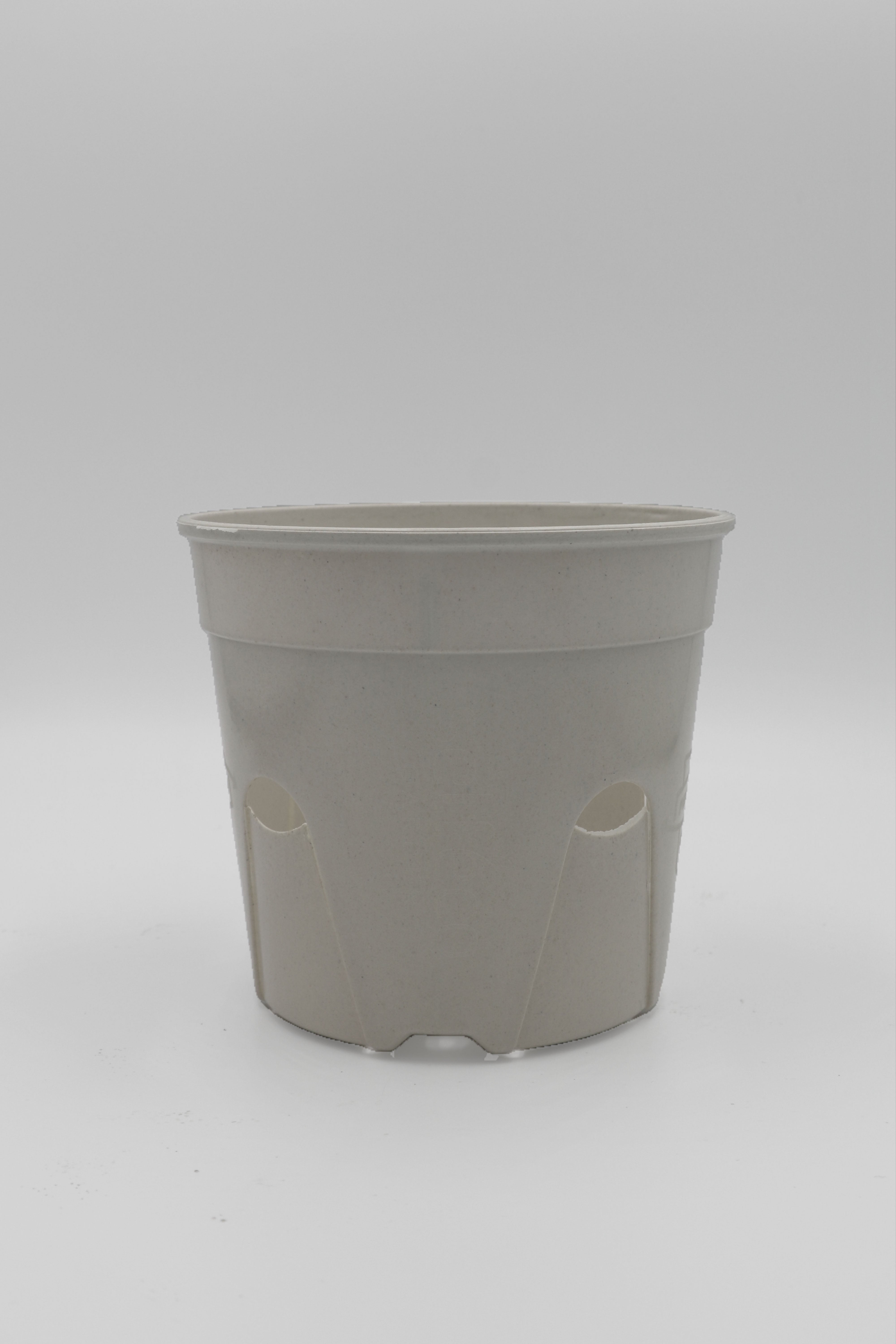


4" Round Pot -100 Count Case
Our 3" and 4" pots are made from eco-friendly, industrially compostable materials.These pots are not designed to be planted directly in the ground. For best results, gently remove your plant before planting to support healthy root growth.A more sustainable alternative to plastic—without compromising plant success.
5,000-unit minimum
Description
SelfEco Garden Pots are made from bio-based materials, offering a more sustainable alternative to traditional plastic pots.
Our 3” round size is perfect for herbs, annuals, and plants ready for the next stage. When it’s time to transplant, simply remove the plant from the pot and place it into soil or a larger container for best results.
These pots are industrially compostable and are not designed to be planted directly in the ground.
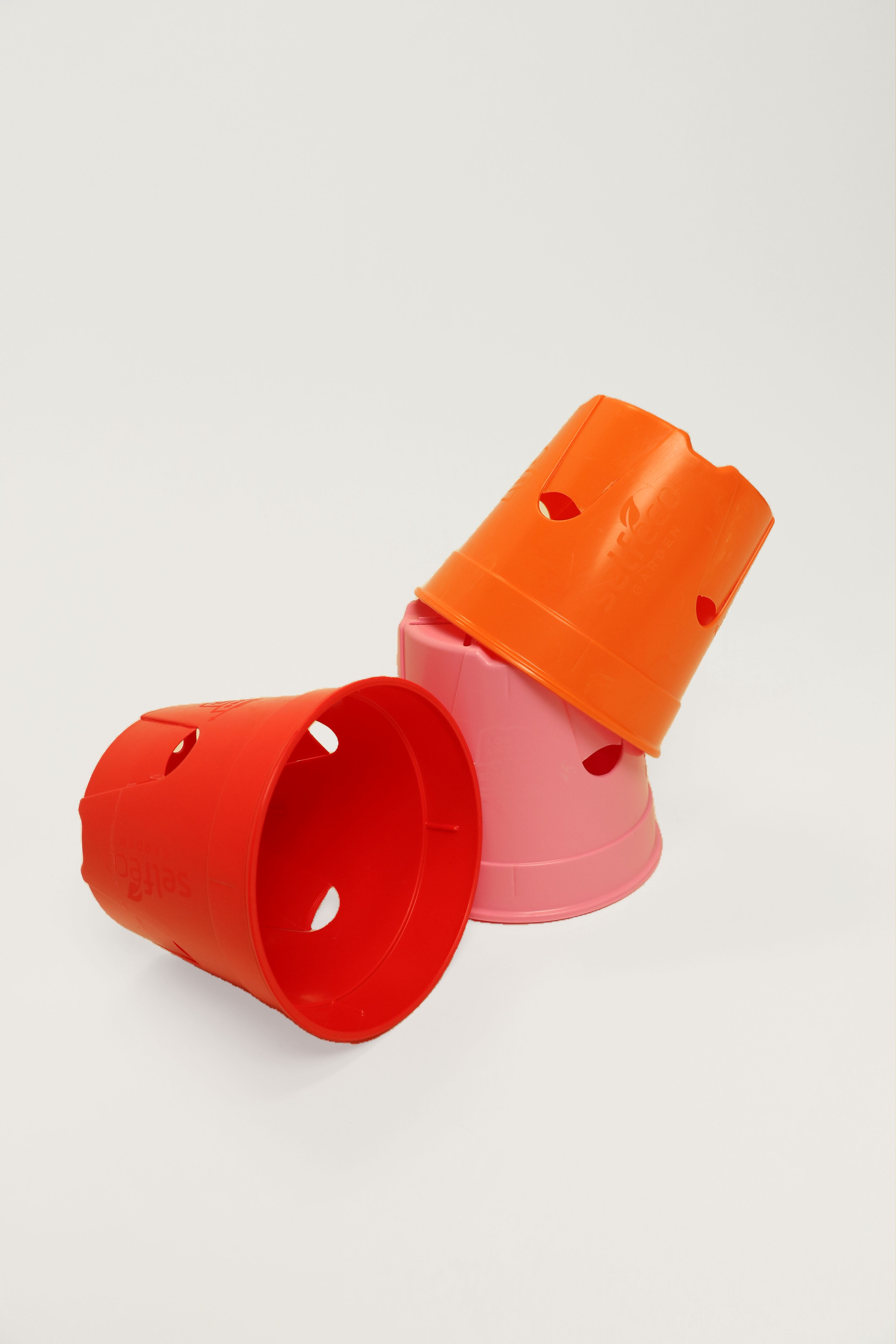
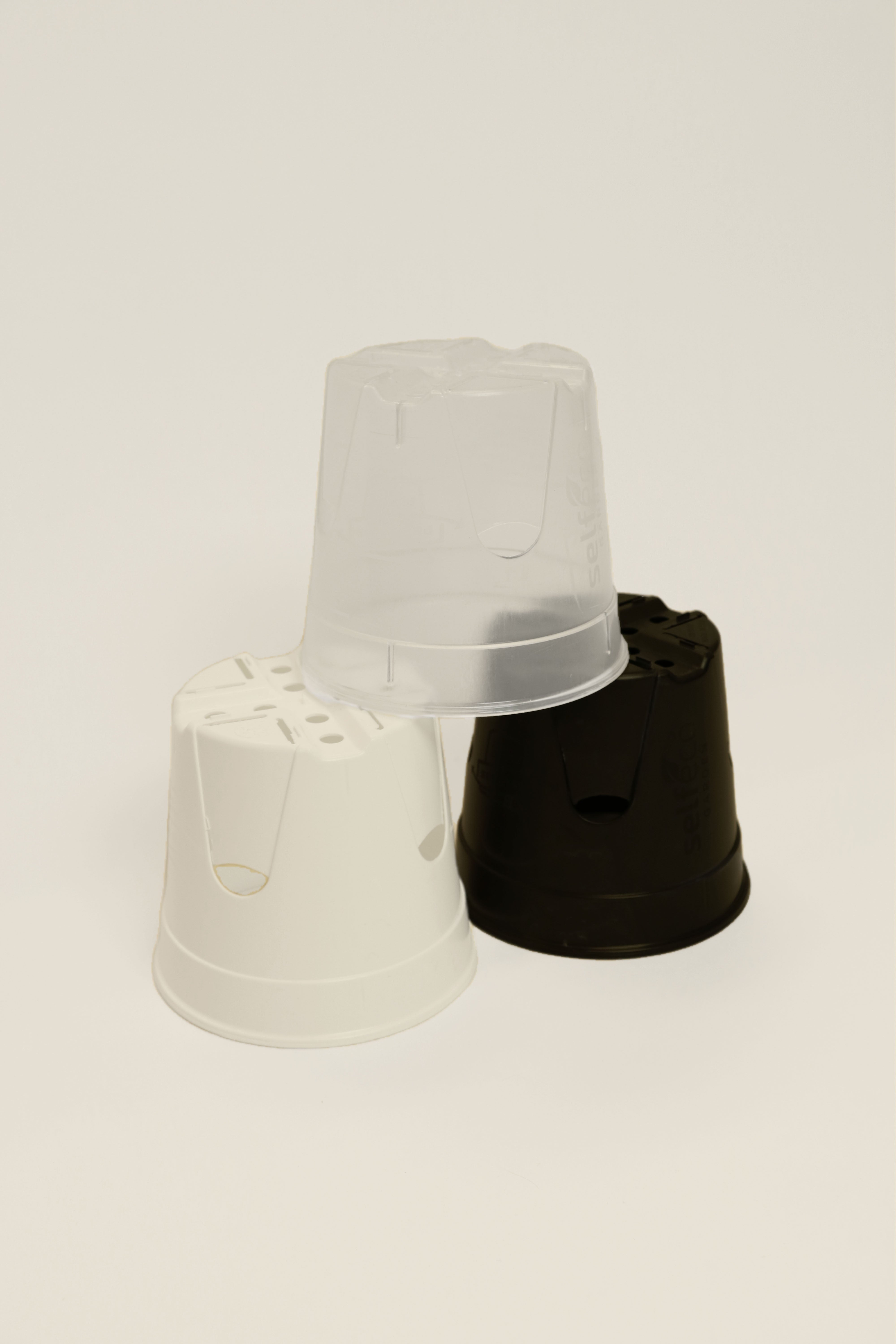
Available in 11 bio-based colors, they’re ideal for organizing, display, or adding a pop of color to your garden or retail space.
Materials
The SelfEco Pot is made from PLA (polylactic acid) derived from renewable plants like corn, switchgrass, and sugar beets grown in the United States.
Natural starches are processed into a biopolymer that looks and performs like plastic without drilling for oil. Plant food additives help the pot break down faster than standard PLA while feeding your plants along the way.
This product is petroleum free, tree free, and responsibly compounded in the USA.
Dimensions
Eco+ Pots are available multiple sizes and are designed to match standard container dimensions used by growers and retailers.
- Sized to replace traditional petroleum based pots
- Compatible with existing growing, shipping, and retail systems
- Suitable for annuals, perennials, and larger plants depending on size
Made in the USA
For growers and retailers, where your containers come from matters just as much as how they perform. All SelfEco products are designed, manufactured, and assembled in the United States to support reliability, consistency, and long term sustainability in an increasingly unpredictable global market.
Pairs well with
Composting and End of Season Notes
Every garden environment is different. Some pots fully break down in one growing season. Others may leave small remnants. Any remaining material can be tilled into your soil for added nutrients or composted at an industrial composting facility where available.
Made in the USA 🇺🇸 Designed for the Real World.
Reliable Supply
Reduces shipping delays, port disruptions, and seasonal availability issues.
Stable Pricing
Avoids sudden tariff changes and import cost swings that impact margins.
Faster Turnaround
Shorter supply chains allow quicker response to demand and seasonal shifts.
Consistent Quality
Tighter production controls deliver dependable performance across shipping, handling, and display.
Built for Growing Conditions
Designed and tested to perform across U.S. climates, soils, and weather patterns.
Lower Carbon Footprint
Shorter transportation distances help reduce emissions and support sustainability goals.
Retail Ready Story
Gives garden centers a clear American made and eco friendly message shoppers value.
Better Support & Communication
Domestic manufacturing allows faster issue resolution and clearer communication when it matters.
SelfEco Garden Pots FAQs
What nutrients feed the plants?
SelfEco pots contain plant food integrated directly into the container walls. Nutrients come from coffee chaff, worm castings, and other natural organics. As the pot breaks down, nutrients and proteins are released directly into the root zone, supporting faster establishment and more uniform early growth.
Are the nutrients safe for commercial growing environments?
Yes. All nutrients are natural and organic. Materials are responsibly compounded in the USA and are California Prop 65 compliant, making them safe for greenhouse operations, retail environments, and end customers.
Why not peat based containers?
Peat based pots do not contribute meaningful nutrition to the root system and can take up to 100 years to regenerate. From an operational standpoint, peat containers often lack durability and consistency. SelfEco pots use renewable materials that actively feed plants while maintaining structural integrity during production.
Where are SelfEco pots manufactured?
SelfEco pots are designed, manufactured, and assembled in White Bear Lake, Minnesota. Domestic production supports consistent quality, reliable supply, and shorter lead times.
How do these perform compared to other biodegradable or peat pots in production?
Many biodegradable, peat, or fiber pots tend to collapse, become mushy, or fail under compression in automated planting and handling systems. They also typically require added fertilizers.
SelfEco pots are engineered to maintain strength during propagation and handling while delivering built in plant nutrition as they break down. This reduces labor, simplifies inputs, and eliminates the need for separate fertilizer applications during early growth.
How long do the pots last in greenhouse conditions?
When filled with soil and plants, pots typically maintain structure for up to six months above ground. Actual lifespan depends on irrigation practices, humidity, and temperature. Pots are designed to hold up through propagation and finishing while still breaking down after transplant.
What happens if the pot has not fully broken down by the end of the season?
Breakdown rates vary by environment. If remnants remain, they can be tilled directly into the soil to return nutrients for the next crop cycle. Industrial composting is also an option where facilities are available.
Is white mold an issue in production?
White mold can appear if pots are exposed to excessive moisture. This is a normal response of natural materials. Adjusting irrigation schedules and improving airflow typically resolves the issue. Overwatering above ground should be avoided.
What is the shelf life for inventory storage?
When stored away from heat, moisture, and direct sunlight, SelfEco pots have a shelf life of several years. Exposure to heat and moisture will accelerate breakdown.
How are plant based plastics produced?
Plant based plastics are created by breaking down renewable plant materials into natural sugars, which are then processed into a biopolymer. This eliminates the need for petroleum based plastic production while delivering consistent performance.
What does tree free mean for growers?
Tree based materials require long growth cycles and significant resources. The materials used in SelfEco pots are quickly renewable, supporting more sustainable sourcing without sacrificing production reliability.
How do the pots break down without industrial composting?
SelfEco pots are not made from 100 percent PLA. Natural plant food additives allow the material to break down faster than standard PLA in soil environments. Any remaining material can be tilled into the soil or industrially composted where available.